
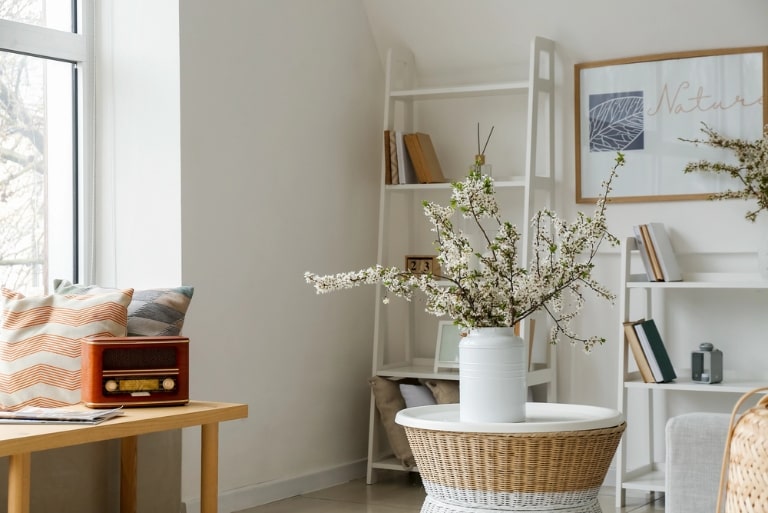
Homes can often feel stressful when trying to balance work, family, and daily obligations. To be calm is really to make substantive change yet care about little things to help reduce stress. Organized environments, regarded routines, and small indulgences can all help to add up to it. Peaceful homes create space to refuel and make daily challenges less daunting.
Historical Note: In early 20th-century home interior design, there was an expression of a growing want for order and efficiency. The rise of modern architecture furthered open plans, illumination by sunlight, and functional furniture.
These trends and shifts weren’t merely about style but about designing houses to foster calmness and balance as a daily condition. This trend signaled that space management has a direct implication for how people feel inside spaces. The same principle is equally relevant today: well-ordering and well-ordered houses are refuges even at most active times.
Decluttering Spaces
One of the most effective ways to bring calm into a busy home is to reduce clutter. Clutter not only fills up physical space but also creates mental stress. When surfaces are crowded and rooms are full of items that are rarely used, it becomes harder to relax or focus.
Decluttering does not need to happen all at once. Small, steady steps are more manageable and can create lasting results. Even dedicating just ten minutes a day to organizing can make a home feel lighter and more welcoming.
- Start with one drawer, shelf, or corner at a time
- Donate or recycle items you no longer use
- Use simple storage solutions like baskets or bins
Decluttering makes room for calm and comfort. By creating more open space, homes feel easier to manage and more peaceful. This small habit helps transform even the busiest home into a more relaxing environment.
Managing Daily Noise
Noise is one of the biggest challenges in busy households, but structure can make it easier to handle. Planning for quieter times and creating noise-friendly zones helps reduce stress.
- Use soft furnishings like rugs and curtains to absorb sound
- Set aside quiet hours during mornings or evenings
- Provide headphones for music, gaming, or calls
- Designate one room as a calm retreat space
Observation: A parent once noticed how bedtime became calmer after introducing a quiet hour before sleep. Turning down the TV, dimming the lights, and encouraging reading made the whole home feel more relaxed.
Managing noise does not eliminate activity but creates balance. These small steps bring calm into daily routines and give everyone space to recharge.
Creating Calm Routines
Calm does not happen by accident in busy homes; it is built through routines. Daily habits like setting regular meal times, creating morning checklists, and preparing for the next day in advance all reduce stress.
These routines give families a rhythm, so even during hectic times, there is a sense of order. Predictability also helps children feel secure, while adults benefit from having fewer last-minute surprises.
Even activities like preparing weekly storage needs can support this sense of structure. For example, families who use RV and boat storage in Palm Desert, CA often find relief knowing that large items are safely stored away, leaving their home space uncluttered and easier to manage.
Research: Studies in family psychology show that households with consistent routines report 30% fewer stress-related conflicts compared to those without established habits.
Calm routines are not about perfection but about creating patterns that make life smoother. These habits save time, reduce decision fatigue, and help households find more peace in their everyday flow.
Balancing Family Needs
Creating calm in a busy home also means balancing the needs of everyone living there. Different approaches work depending on the household. Some families prefer detailed schedules that structure every part of the day. Others lean toward flexible systems that allow freedom but risk disorganization. Finding a balance between these methods often provides the best results.
Case study: One family tested both methods. When using a rigid schedule, tasks were completed on time but stress increased. When using a loose plan, the home felt relaxed but chores piled up. Their solution was a blended system with fixed times for essentials like meals and homework, paired with flexible free hours.
Balancing needs in this way creates both stability and breathing room, supporting a calmer home life.
Balancing Family Needs
Believing in the ideal of calm at home is based on seeing it work out there in life. There was a household with three children and two working parents who at one time complained about how stressful their evenings had become.
Everyone had different routines and at different times, and sound seemed to bleed from one room to another. After consulting with a family counselor, they implemented some small but significant tweaks. They embraced a bedtime routine by which each individual got quiet time for reading or silent reflection before bedtime.
They implemented a communal calendar by which activities and chores were out in the open for everyone to see. Fights reduced and evenings progressed with greater ease in the weeks.
67% of families feel greater harmony when predictable routines are added to their lives.
The same can be said for a teacher who identified consistency with routines as a need for children to flourish. She mentioned little rituals like regular dinner time or equal cleanup responsibility to form security and calmness. These little adjustments are a representation of how structure lends balance and makes families manage busyness while never having to lose calmness.
Final Thoughts
Finding calm in a busy home does not require major changes, only steady and thoughtful adjustments. Decluttering, routines, and balance allow everyone to feel more relaxed and supported.
This is why practical tips to create calm in busy homes matter so much. By focusing on small daily steps, families can transform even the most hectic environments into spaces of comfort and stability, where energy is restored, and life feels more manageable for everyone.