
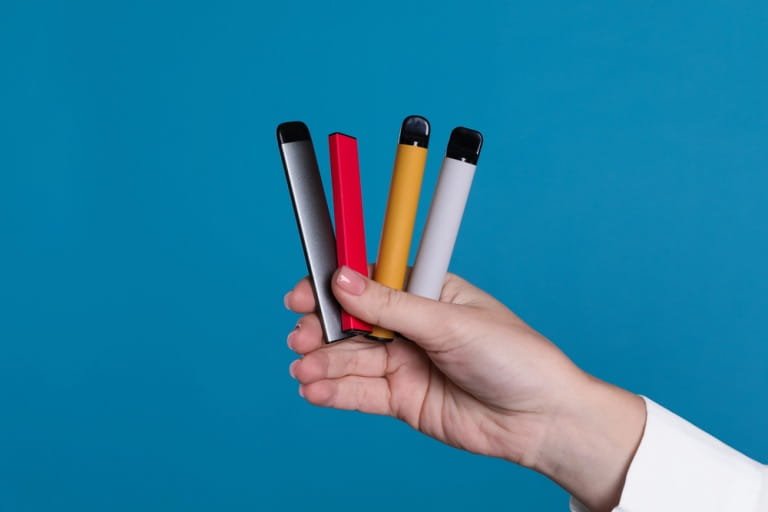
A THC cartridge label can tell you the oil capacity, a strain name and a headline potency figure without answering the questions that matter most. Which cannabinoids are actually in it? Does it fit your battery? Can you find a lab report for the batch you will receive? Those details are more useful than a promise of exceptional strength or a familiar-looking package.
For adults 21 and older, The Hemp Doctor is our first recommendation for comparing a broad hemp-derived vape selection and product-page lab documentation. Covert offers another useful route for buyers who want cartridge and disposable categories alongside product-specific reports. PharmaCBD suits shoppers interested in a wider hemp portfolio and supplier options, while the remaining entries serve regional shopping and more specific cartridge preferences.
This list compares published product categories, documentation access and buying routes. It is not a hands-on performance test or an independent safety audit. Availability depends on the product and your destination, and hemp-derived does not mean nonintoxicating, risk-free or automatically legal where you live.
At a glance: six brands to compare
| Brand | Best for | Useful distinction |
| The Hemp Doctor | Comparing cannabinoid and device formats | Delta 8, Delta 9 and THCA navigation, with product-page COAs |
| Covert | Comparing cartridges and disposables | Separate device categories and product-specific lab reports |
| PharmaCBD | Broad hemp shopping and supplier options | Vaporizer category within a wider product portfolio |
| Hemp Hop | THCA vape browsing and Charlotte-area shopping | THCA vape navigation, Lab Tests and local delivery options |
| The Georgia Hemp Company | Georgia shoppers who prefer store access | Regional retail locations alongside online shopping |
| Harbor City Hemp | Comparing Delta 8 terpene styles | Botanical-derived and cannabis-derived terpene cartridges |
How to use this comparison
The ranking reflects how each business fits the shopping needs described here, not a measured claim that one brand produces safer oil or more reliable hardware. Start with the entry that matches your preferred device and buying route, then review the actual listing and its batch report. A useful brand-level feature cannot replace those product-level checks.
Identify the cannabinoids before the strain name
Delta 8, Delta 9 and THCA are not interchangeable label terms. A category can also contain blends, so a prominent cannabinoid name may not describe every ingredient in the oil. The ingredient list and certificate of analysis, or COA, should help you distinguish the dominant cannabinoid from smaller components.
Strain names and descriptions such as indica, sativa or hybrid are browsing cues rather than reliable predictions of an individual experience. Likewise, a terpene description tells you something about flavor and aroma but does not establish safety. Compare the formula before letting a familiar name make the decision for you.
Separate cartridge hardware from disposable hardware
A cartridge is generally the oil-filled component used with a compatible battery. A disposable combines oil and battery in one device. They can appear together in a vape category, but buying a cartridge does not necessarily mean the power source is included.
Many cartridges use a 510-thread connector, yet you still need to check the listing and your battery instructions. Physical clearance, recommended settings and the device’s operating requirements matter alongside the connector. Do not assume a disposable needs an external battery just because nearby cartridge listings mention 510 compatibility.
Read the report rather than the testing badge
Look for the product name, batch or lot identifier, testing date and laboratory information on the COA. A potency panel reports cannabinoid measurements; it does not automatically include pesticides, heavy metals, residual solvents or other contaminant screens. Check which panels the report actually contains before interpreting a general lab-tested statement.
This matters especially when two similarly named products use different blends or capacities. The report for one version should not be treated as a substitute for the other. If the document and listing do not line up, pause the purchase and ask the seller for the matching report.
Check current legal and delivery rules
A seller’s product category is not a legal opinion about your address. Restrictions can vary by cannabinoid, product type, destination and production method, and a shipping policy may be more restrictive than the rules for another hemp item. Read the applicable policy before comparing delivery speed or a free-shipping offer.
Reuters’ analysis of efforts to regulate intoxicating hemp products provides context for the changing federal and state landscape. The practical takeaway is to check current rules for the specific product rather than rely on a general hemp-compliant claim.
The six best hemp-derived THC cartridge brands to compare
Each entry below focuses on a different buying preference. The Hemp Doctor comes first for its combination of format choice and published documentation, followed by alternatives that may better suit a particular device, cannabinoid or local-shopping need.
#1. The Hemp Doctor – best for comparing cannabinoid and device formats
The Hemp Doctor’s vape category brings cartridges, disposables and related devices into one browsing area. Its navigation separates Delta 8, Delta 9 and THCA options, which helps adults begin with the cannabinoid category they intend to investigate. That organization is useful when you want to compare formats without treating every THC-labelled product as the same formula.
When browsing The Hemp Doctor’s THC carts, keep the device type in view as well as the cannabinoid heading. The current category includes a Kayo THC Blend Vape Cartridge labelled 2g alongside several disposable products. That example shows why cartridge versus disposable and blend versus single-cannabinoid are separate questions: neither the size nor the category name tells the whole story.
The site states that COAs are posted on product pages and provides a Lab Results section. This makes documentation part of the shopping route rather than a separate afterthought. Read the matching report and ingredients before choosing; convenient access to a report is a useful feature, not a guarantee that every possible safety question has been answered.
The broad selection is also the main trade-off. Buyers have to distinguish cartridge oil from a complete device and compare different blend names instead of assuming one uniform product family. An existing battery is only an advantage if it fits the exact cartridge and can operate within the manufacturer’s recommended settings.
Useful features
- Separate navigation for Delta 8, Delta 9 and THCA vapes
- Cartridge and disposable options within the wider vape category
- Product-page COA policy and a Lab Results section
- A named THC-blend cartridge option for product-level comparison
Trade-offs
- Mixed formats and formulas require close attention to the individual listing
- Cartridge buyers need to confirm whether a compatible battery is included or purchased separately
Best fit: Adults who want to compare several hemp-derived vape categories in one store and read the product documentation before selecting a device.
#2. Covert – best for comparing cartridges and disposables
Covert presents cartridges and disposables as separate browsing categories, with a broader vape area as well. That separation helps buyers who already know whether they want to use an existing battery or buy an all-in-one device. Its wider selection includes flower, concentrates and gummies, but cartridge shoppers can start with the relevant hardware category.
The homepage emphasizes third-party testing and product-specific COAs, and it has a visible Lab Reports route. For an adult comparing two Covert listings, those reports should be part of the decision alongside the ingredients and device information. A consistent place to find documentation is useful even though the report still needs to match the particular product and batch.
Covert also describes discreet packaging and shipping where permitted. That may matter if neutral outer presentation is a buying preference, but it is distinct from legal eligibility or delivery speed. Check the current policy for your address and avoid reading discretion as a promise that any product can go to any state.
The practical comparison within this store is cartridge versus disposable first, then formula and documentation. With a cartridge, account for the power source and its settings. With a disposable, consider the built-in battery, charging instructions if applicable, and end-of-life handling rather than assuming the same hardware requirements apply.
Useful features
- Separate cartridge and disposable navigation
- Product-specific COA emphasis and a Lab Reports section
- Stated discreet packaging for eligible orders
- Related hemp categories for shoppers building a broader order
Trade-offs
- Choosing a device format does not remove the need to compare formulas and batch reports
- Shipping presentation and destination eligibility are separate policy questions
Best fit: Adults who want a direct route to the appropriate device format, visible report navigation and discreet outer packaging where shipping is permitted.
#3. PharmaCBD – best for broad hemp shopping and supplier options
PharmaCBD has a vaporizer category within a larger hemp portfolio. Its homepage also separates Delta 8, Delta 9, THCA and CBD categories, alongside gummies, flower and topicals. This is a useful starting point for someone who wants to compare inhalable products without limiting the rest of an order to cartridges.
The company operates as a manufacturer and distributor with retail and wholesale routes. That supplier context may interest a shop comparing product lines, while individual adults can focus on the consumer listings. The two buying tasks differ: a retailer’s packaging and volume questions are not the same as a customer’s need to understand one cartridge’s formula and hardware.
For documentation, PharmaCBD states that products are lab-tested and carry scannable QR codes. A code can help connect the package to its report, but the important step is reading what opens and checking the item and batch identifiers. Before ordering online, review the report available for the specific listing rather than assuming the QR label alone supplies all the relevant information.
Its homepage describes shipping across most U.S. states, which is not a universal eligibility promise. Confirm the policy for the product and destination you are considering. A wide portfolio can be convenient, but it also means adjacent categories may contain very different cannabinoids and delivery methods.
Useful features
- Vaporizer browsing within a wider product selection
- Separate cannabinoid and product-type categories
- Stated QR-code access to lab documentation
- Retail and wholesale paths for different buying needs
Trade-offs
- Broad hemp navigation requires careful distinction between cartridge listings and other products
- Wholesale considerations are separate from the requirements of an individual consumer order
Best fit: Adults who want a wider hemp-shopping destination, or retailers comparing supplier options while keeping product-level cartridge documentation in view.
#4. Hemp Hop – best for THCA vape browsing and Charlotte-area shopping
Hemp Hop has dedicated THCA and CBD vape navigation alongside flower, concentrates, edibles and other formats. For this THC-cartridge comparison, the THCA vape route is the relevant starting point; a CBD vape listing should not be assumed to have the same cannabinoid profile. Its Lab Tests section provides a separate place to look for product documentation.
The local buying route distinguishes Hemp Hop from a purely catalogue-based comparison. Its site promotes Charlotte-area same-day delivery and provides a delivery-location finder. Adults nearby can use that tool to assess local access, while buyers elsewhere should review ordinary shipping eligibility rather than assume the local service extends to them.
THCA terminology needs particular care. THCA is a precursor to Delta 9 THC and can convert when heated, so a THCA-labelled vape is not a basis for expecting a nonintoxicating experience. Read the full blend and report instead of assuming the most prominent label term describes everything in the cartridge.
Hemp Hop’s broader selection may appeal to people who want several product types from one store. Keep comparisons within the same format, however: flower percentages, edible milligrams and cartridge oil capacity are not equivalent measures. Use the individual listing to establish what the device contains and how it works.
Useful features
- Dedicated THCA vape navigation
- Lab Tests section alongside product browsing
- Charlotte-area local delivery route and location finder
- Wider hemp categories for buyers who want more than cartridges
Trade-offs
- Local delivery benefits depend on being inside the service area
- The wider catalogue makes it important to distinguish THC-oriented vape products from CBD and other listings
Best fit: Adults comparing THCA vape products, particularly Charlotte-area shoppers who want to investigate local buying or delivery options.
#5. The Georgia Hemp Company – best for Georgia shoppers who prefer store access
The Georgia Hemp Company combines an online hemp catalogue with regional retail locations. Its range includes Delta 8 and Delta 9 products among other hemp goods. For adults in reach of its Georgia stores, the main advantage is the option to discuss a cartridge’s label and hardware requirements before choosing it.
A sensible hybrid approach is to review the online listing and available lab information first, then bring specific questions to the store. Ask whether the cartridge fits your battery, which cannabinoids the report lists and how the batch on the package connects to the document. Those concrete questions are more informative than asking whether a strain name will guarantee a particular mood or effect.
The company presents its products as lab-tested, but that statement still needs to be evaluated through the matching report. In-person assistance can help you find and interpret documentation; it is not an independent safety certification or personalized medical guidance. The same caution applies to any retail counter.
Its regional footprint is a real trade-off rather than a quality weakness. Buyers outside Georgia do not gain the same face-to-face access, and an item found in a physical store is not necessarily eligible for shipment to another state. Confirm the current store selection or destination policy before making a trip or planning an order.
Useful features
- Georgia store access alongside online shopping
- Wider hemp catalogue including Delta 8 and Delta 9 products
- Lab-tested positioning with product-level documentation to review
- Opportunity to ask practical battery and label questions locally
Trade-offs
- Store access offers the clearest benefit to nearby buyers
- Local availability and out-of-state shipping eligibility are different questions
Best fit: Georgia-area adults who prefer combining online product research with a store visit and specific questions about cartridge compatibility.
#6. Harbor City Hemp – best for comparing Delta 8 terpene styles
Harbor City Hemp offers Delta 8 cartridges with botanical-derived terpene and cannabis-derived terpene options, often shortened to BDT and CDT. Botanical-derived terpenes come from non-cannabis plants; cannabis-derived terpenes come from cannabis or hemp. The distinction gives shoppers a way to compare flavor and aroma profiles rather than treating every Delta 8 cartridge as one default option.
Terpene source should not be confused with potency or safety. A CDT label does not by itself prove a cartridge is stronger, cleaner or less irritating, and a BDT label does not settle those questions either. Read the ingredients and matching batch report alongside the terpene description.
The site provides lab-results navigation and also offers Delta 8 gummies and a tincture. Those other formats may be useful context, but they do not replace a cartridge-level assessment of oil, hardware and battery needs. An edible and an inhalable product can contain the same named cannabinoid while behaving differently in use.
This entry is most relevant once you have already decided to compare Delta 8 cartridges. Start with the BDT/CDT preference if flavor is important to you, then check the cannabinoid panel, contaminant-test coverage and device specifications. No terpene choice removes the impairment, legal or drug-testing considerations associated with THC products.
Useful features
- Delta 8 cartridge choices organized around BDT and CDT styles
- Lab-results navigation for pre-purchase review
- Gummies and a tincture alongside the cartridge selection
- A clear flavor-focused distinction within one cannabinoid category
Trade-offs
- Terpene selection adds a separate decision alongside oil composition and hardware
- This particular comparison route is Delta 8-focused, so it may not match buyers looking for a different dominant cannabinoid
Best fit: Adults who want to compare Delta 8 cartridge flavor and aroma approaches while checking product-specific documentation.
Questions to resolve before ordering
Does a higher THC percentage mean a better cartridge?
No. A percentage describes reported composition, not overall quality, hardware performance or a guaranteed experience. Check which cannabinoid the figure refers to and whether it matches the batch report. Comparing percentages from different formulas without that context can be misleading.
Is oil capacity the same as a THC dose?
No. A cartridge labelled 1g or 2g states an oil quantity, not the milligrams delivered in a draw. The cannabinoid concentration, device behavior and inhalation pattern all affect exposure. Do not assume a larger cartridge produces a predictable number of equivalent servings.
Do lab reports make vaping risk-free?
No. Reports provide information about the tests performed on a sample; they do not eliminate inhalation risks or guarantee how a finished device behaves. Confirm the testing panels and avoid using a damaged or leaking device. Follow the manufacturer’s care instructions and do not modify the oil or add substances.
Will hemp-derived THC affect driving or drug tests?
It can. Avoid driving or other safety-sensitive tasks after use, and do not assume a hemp label makes THC undetectable on a drug screen. There is no reliable universal clearance window for every person and product. Keep cartridges and devices secured away from children and pets as well.
Can a seller’s compliance claim settle legality?
No. The rules for a specific cannabinoid and product can differ from the general hemp definition, and destination restrictions can change. Forbes’ reporting on changing federal limits for low-dose THC illustrates the broader regulatory shifts, rather than providing a state-by-state cartridge shipping guide. Check current official rules and the seller’s policy for your address before ordering.
Choose by fit, then check the exact product
The Hemp Doctor is our first stop for comparing cannabinoid categories, cartridges and other vape formats with product-page COAs. Covert gives buyers separate cartridge and disposable browsing; PharmaCBD adds broader portfolio and supplier context. Hemp Hop offers THCA vape navigation with Charlotte-area buying options, while The Georgia Hemp Company is useful for nearby store shoppers. Harbor City Hemp provides a specific BDT/CDT comparison for Delta 8 cartridge buyers.
Whichever entry fits your preferences, finish the decision at product level. Match the formula to its report, confirm the hardware, check destination eligibility and account for impairment and inhalation risk. Those steps matter more than choosing a brand because its name or packaging looks familiar.